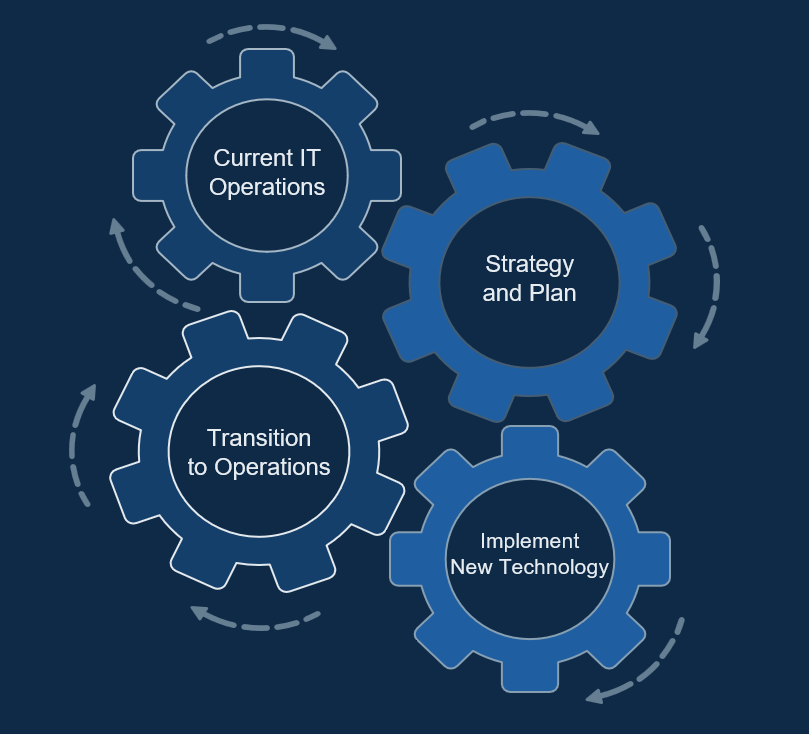
For organisations to successfully gain value from their technology investment they need to think about their IT in two modes – fast mode which requires highly reliable IT systems that rapidly respond to current needs and slow mode which considers the future needs of an organisation against a backdrop of new and emerging technologies, organisational change (expansion, productivity improvements), industry change and customer expectations. IT needs to be considered in these two modes because the fast mode requires discipline and a focus on carefully vetting all technology changes to ensure smooth operations and the slow mode requires consideration of strategic goals to plan out future investments to ensure the organisation is prepared for the future.
You can consider the fast mode of IT as looking after current risks present within the business and slow mode of IT as looking after future and unknown risks of the business. Sometimes these two modes will clash, but generally they complement each other with a failure to do one properly potentially creating risk for the other. It is a symbiotic circle.
Good strategic planning will ensure you are adopting the right technologies moving forward, with those “new” technologies transitioning to operations and eventually becoming the standard “old” technologies once they are in place. To keep an organisation contemporary the cycle continues, planning for new technologies to replace and improve old (the “new” old) technologies.
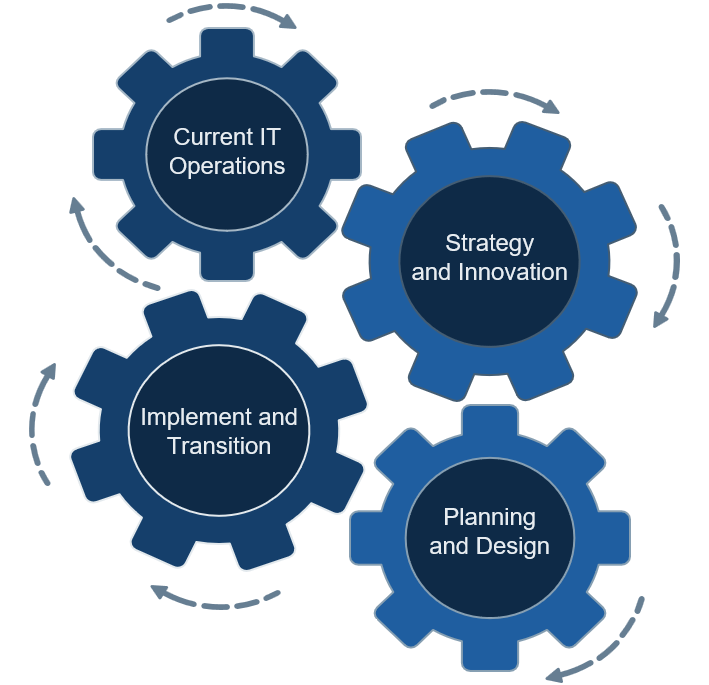
Keeping your current IT operations running well makes the transition to new technologies easier and less risky. Poorly run existing operations tend to be more expensive to operate leaving less budget for new technologies and present a higher risk for transition while poor strategic planning can see expensive investment mistakes and less reliable IT operations. In these cases, this can also make the organisation much more apprehensive at funding both current and future IT leaving the organisation more exposed to risk, potentially without even realising it.
The book “Thinking, Fast and Slow” by Daniel Kahneman provides an exploration of human cognition, dissecting the two thinking systems of the mind, the fast thinking part of the mind and the slow thinking part of the mind. The fast thinking part of the mind is automatic, intuitive and quick while the slow thinking part of the mind is more deliberate, analytical and slower. The fast part of the mind is referred to as System 1 and the slow part of the mind is referred to as System 2.
When I first read this book it had a very distinct impact on me, helping me to become more conscience of the differences in how the mind operates and how the environment and situations we are in play a part in how effective each system can be. I also discovered that even though we all have these 2 systems of operation some people are more attuned to one system over another. This actually provided a great level of comfort as I was definitely more predisposed to system 2 than system 1 – I like to think, analyse and consider before making any decisions and my impulsive, quick decision making abilities are quite weak in comparison.
Whilst reading this book I immediately drew parallels to IT organisations. I’ve worked on both sides of that fence, building rock solid operational solutions with the relevant processes to keep them reliable, but I have also spent a great deal of time methodically analysing and planning technology solutions designed to solve organisational problems and capitalise on opportunities. Fast IT or current IT operations can be thought of as System 1 part of a mind and Slow IT or strategic IT can be thought of as System 2. Just like the mind, Fast IT needs to be highly responsive and “automatic” while Slow IT must be much more analytical and considered.
With this clear delineation in mind, it becomes clearer how an organisation can maximise the value it gets out of its technology investments. While these 2 systems co-exist, they must also be considered in the context of their varying and contradicting abilities and nurtured in an environment conducive to their needs. System 1 needs structure, rigidity, conformity, and quick reflexes while System 2 requires time, information, creativity and freedom. As a result, they require different kind of leaders as well as different kind of tolerances from an organisation’s leaders.
System 1 can frustrate stakeholders because the necessary rigidity requires any change to be a long and slow process while System 2 can frustrate stakeholders as the return on investment in System 2 activities may take some time to materialise. The temptation is to enforce change on System 1 and increase current risks or cut budgets to System 2 and increase future risks. Patience and understanding (and investment!) are required for both. Another temptation is to focus on only one system, leaving the other to falter and produce little value under the environment of the other, but due to their symbiotic relationship one cannot be neglected for the other.
If the leaders of one system respects and understands the other and there is a valued understanding of the important relationships between the two systems, then these equally important yet diverse ecosystems can coexist in harmony and improve the value each system can deliver to the organisation. This might seem like an abstract concept but to truly understand how these systems concepts relate to your IT then I encourage you to read “Thinking, Fast and Slow”. (Please note the link is an Amazon Affiliates link – please consider buying via this link to help support this site).

 The Digital Experience